Your cart is currently empty!


Grass Fed Desiccated Beef Lung Supplement
44.90 €
Traditional peoples, Native Americans and early ancestral healers believed that eating the organs from a healthy animal would strengthen and support the health of the corresponding organ of the individual. Grass-fed Beef Lung is loaded with vitamins and minerals. It is a great source of vitamin B12. It also contains minerals such as heme iron,…
Description
Traditional peoples, Native Americans and early ancestral healers believed that eating the organs from a healthy animal would strengthen and support the health of the corresponding organ of the individual.
Grass-fed Beef Lung is loaded with vitamins and minerals. It is a great source of vitamin B12. It also contains minerals such as heme iron, copper and selenium. Vitamin B12 contributes to the normal functioning of the nervous system, and the formation of red blood cells and helps to reduce fatigue and exhaustion. Selenium is an essential mineral that is important for many bodily processes, including cognitive function, a healthy immune system, and fertility in both men and women. Selenium also contributes to thyroid hormone metabolism. Vitamin A keeps eyesight and skin healthy. Copper contributes to the normal functioning of the immune system and the transport of iron in the body.
Heme iron is a better form of iron compared to non-heme iron, as up to 40% of it is readily absorbed by your body. Iron helps to preserve many vital functions in the body, including general energy and focus, gastrointestinal processes, aids the immune system, and regulates temperature. Iron is also involved in the transfer of oxygen from the lungs to tissues.
Description
Traditional peoples, Native Americans and early ancestral healers believed that eating the organs from a healthy animal would strengthen and support the health of the corresponding organ of the individual.
Grass-fed Beef Lung is loaded with vitamins and minerals. It is a great source of vitamin B12. It also contains minerals such as heme iron, copper and selenium. Vitamin B12 contributes to the normal functioning of the nervous system, and the formation of red blood cells and helps to reduce fatigue and exhaustion. Selenium is an essential mineral that is important for many bodily processes, including cognitive function, a healthy immune system, and fertility in both men and women. Selenium also contributes to thyroid hormone metabolism. Vitamin A keeps eyesight and skin healthy. Copper contributes to the normal functioning of the immune system and the transport of iron in the body.
Heme iron is a better form of iron compared to non-heme iron, as up to 40% of it is readily absorbed by your body. Iron helps to preserve many vital functions in the body, including general energy and focus, gastrointestinal processes, aids the immune system, and regulates temperature. Iron is also involved in the transfer of oxygen from the lungs to tissues.
Related products
-
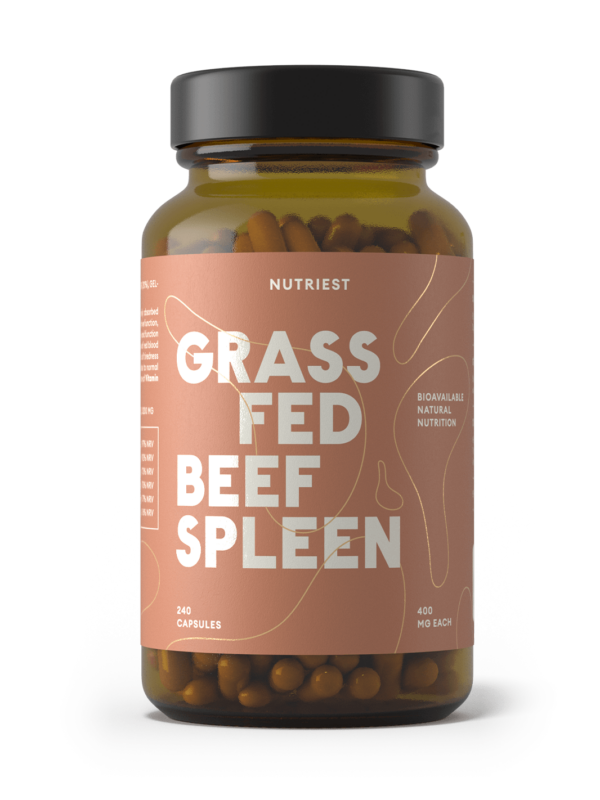
Grass Fed Desiccated Beef Spleen Supplement
49.90 €